
Building the research muscle: from assumption-led design to measured outcomes
RateMyAgent · Lead Product Designer / Product Design Manager
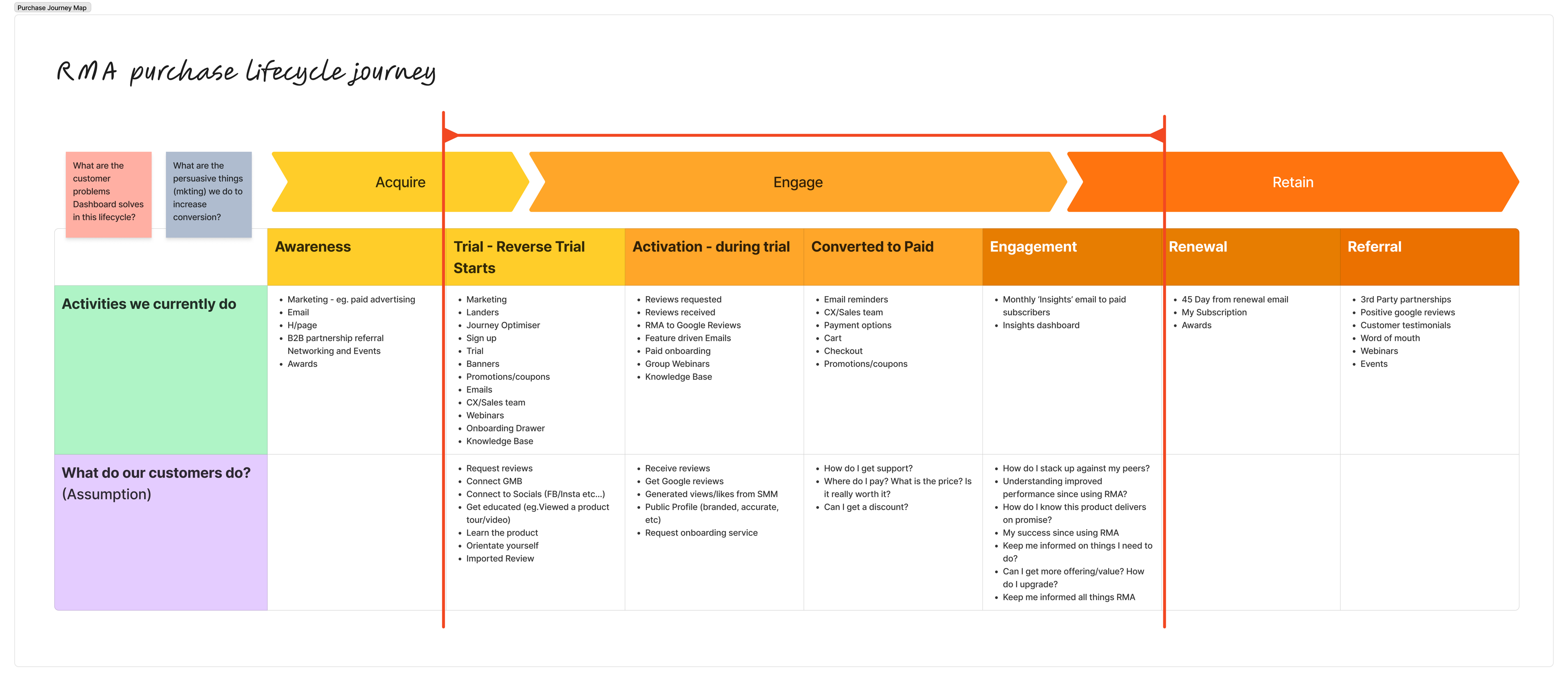
Situation
In October 2023, I inherited a team of 4 Product Designers with varying levels of skill and maturity across product design disciplines — only 2 were open to modern, outcome-driven design approaches. Designers were embedded within development squads, largely optimising screens for visual appeal. Product feedback funnelled almost entirely through senior leadership input, sales, and customer support feature requests — there was no direct measure of the experience customers were actually subjected to.
Complication
Most of what was being shipped had never been validated or de-risked for usability, desirability, value, usefulness, findability, or accessibility. The consequences were showing up across the business:
- High customer churn
- Product decisions being made on assumption and stakeholder happiness rather than evidence
- High cost of support and high cost of customer acquisition
- A design team that wasn't skilling up or being pushed to grow
This raised a set of questions the business had no reliable way to answer: Why were customers not subscribing, or leaving? What parts of the design were working? What was design's actual impact on the business? What should we build next to attract and retain customers? How do we get customer insight to actually influence the roadmap?
Question
How do you build a research and measurement practice inside a team that has never had one — without alienating the people already there, while proving design's value to the business quickly enough to matter?
Answer
First 15 days — baseline the team, not just the product. I reframed and formalised an existing skills framework to establish where the team's maturity, current skills, and aspirations actually sat. This was the hardest part of the whole engagement: only 2 of 4 team members were open-minded about it, and introducing this before I'd earned the team's trust was genuinely difficult. I had to balance team morale against the financial reality of evaluating and reporting on team maturity and what reshaping it would cost.
First 30 days — measure what was already shipped.
- Introduced PURE scores to assess the current state of every key task in the application
- Introduced an SEQ-based intercept survey measuring ease of use on key tasks
- Introduced a quarterly SUS measure to track overall product design health
First 90 days — force customer contact across the whole product team.
- Set a team goal: every Product Manager, Designer, and Tech Lead had at least 30 minutes of direct customer or user interaction every week
- Shared work-in-progress design early and gathered feedback continuously, rather than waiting for finished work
- Led by example writing weekly notes to Product Management, Engineering, and Design about the week's focus and wins
- Opened up WIP design sharing physically in the office through printouts
- Championed and won a regular spot in company-wide product release announcements to talk about what design was working on and how
Over 12 months — institutionalise outcome-driven design. Introduced baseline and benchmark studies across the core product, key user task flows, and the website. The results:
- SUS improved from 68 to 72 (next quarterly study in progress at time of writing)
- Key task flow SEQ scores improved from the mid-3s to the high-6s
- Began influencing marketing and the external design agency to adopt a shared design system and consistent copy standards
Outcome
A team that had never measured its own output now had a repeatable, quarterly view of product design health — and a product organisation that had never talked to customers now had that built into its weekly rhythm. The shift wasn't just methodological; it changed how design's value was seen and discussed across Sales, Customer Support, Engineering, and senior leadership.